It was a good Monday morning. The meat shop doors were open. The crew was busy. The phone rang, and Mike answered with a perky “Hello! Mike’s Meats” —twice before noon. One call was from someone who had questions about the elk he shot, another about three hogs a family was raising. Both conversations were friendly. Mike and the customer discussed products and services. Timeframes seemed reasonable. And then … nothing happened that week, except for a few more calls from other folks.
No return calls. No follow-up questions. No jingles from the driveway bell.
By Friday, this unhandy truth was staring Mike in the face: “We don’t have work.” The holding pen for livestock was empty (not that it had been full recently). Empty, too, was the meat rail in the cooler. The floors had been deep-cleaned; the maintenance list addressed. Mike was saying what many of us have said: “We’re getting calls… but we’re not getting work.”
Mike didn’t have a lack-of-leads problem. He had a lead conversion problem.
What Lead Conversion Really Means
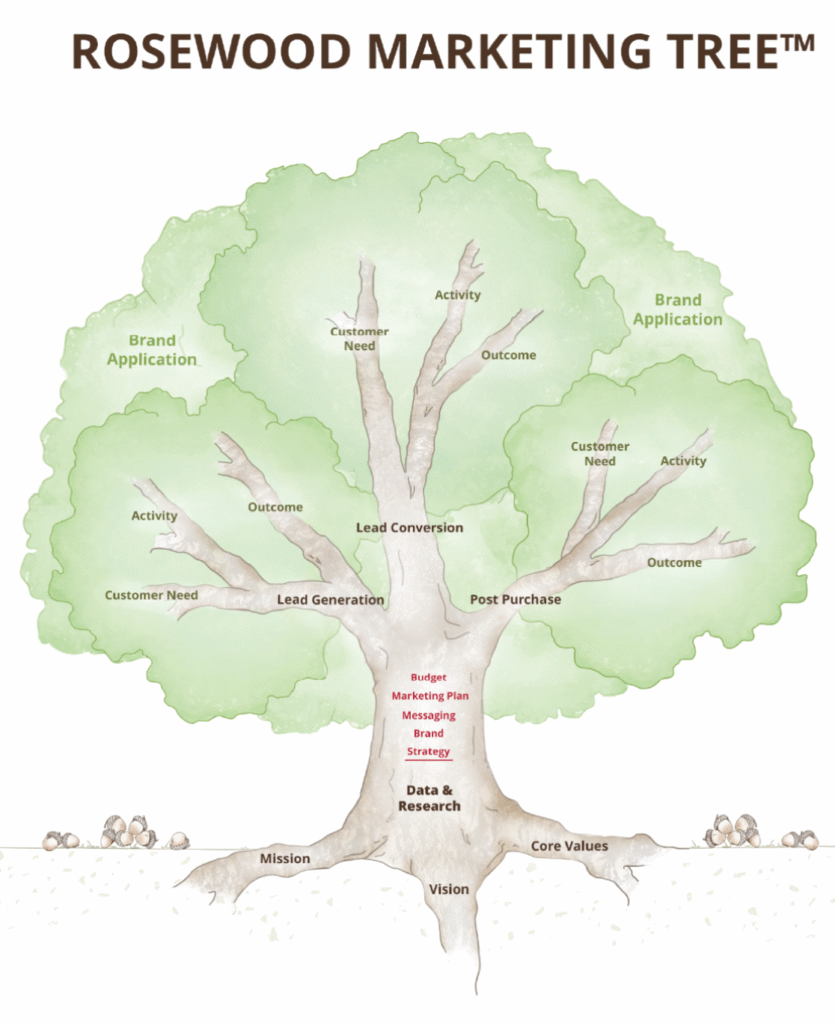
A lead is a potential customer raising their hand. A lead conversion is when that hand turns into a handshake. It’s the link in the sales process chain that, when broken, stops the whole business. What’s the use of shops, of skill sets, of employees, of saws and grinders, of products and production, of advertising, of lead generation, if it all crashes on the important step of lead conversion?
Most businesses lose people between the first conversation and the next step. Why? Most leads are lost, not due to price, but to uncertainty. Robust lead conversion addresses a customer’s uncertainties: trust issues, a lack of understanding of the issue at hand, or not knowing what to do next.
Where Leads Are Commonly Lost
Leads are commonly lost through everyday neglect. It happens so easily in the hustle and bustle of business. The phone rings at a busy moment, and the conversation feels rushed. No clear next step is given. The customer is left to “think about it” on their own. No follow-up happens.
Or the email or website-generated request hits the inbox just as we are chasing another big deal. Several days later, a response is hurriedly tapped out, or even worse, the email goes unanswered. Again, no internal accountability ensured that a follow-up happened. All is quiet, but the potential customer has vanished again.
Are you seeing the pattern? Many leads are commonly lost between the first conversation and the next step. But leads can be dropped anywhere in the process if the next step isn’t taken.
Clarity Builds Confidence
For the hand in the air to become a handshake, the process must be easy and safe. Otherwise, the hand goes down and gets lost in the crowd or ends up shaking hands with the competition. Trust, not tactics, is the biggest key to lead conversion.
To be clear, people don’t need pressure to make decisions. They need clarity. Potential customers need to understand how you could help them with their problem. And they need direction on how to think and what to do next.
A large component of trust is educating the customer about their need and your services. For example, Mike educates people about aspects of the butcher shop industry they might not know. “Your meat is your meat” is so basic to Mike’s principles that he hardly felt it needed to be stated. But not everyone knew that when they took their prized beef or deer to Larry’s Locker, they weren’t guaranteed to get the same meat back. This isn’t a problem for people who don’t care whether or not they get their own meat, but Mike’s clientele cares deeply. Clarity works!
A portable mini-barn builder might need to explain not only what a 2×4 is, but also the significance of using 2x4s and the importance of their spacing.
The mechanic shop will need to explain why they won’t use customer-supplied, discount-store parts and why not all brake pads are created equal. Or he may need to explain why oil leaking into the exhaust is such a serious problem.
An electrician may need to explain the differences between copper and aluminum wire and how this relates to the project.
At Mike’s Meats, a basketful of observations is shared with clients about the qualities of their truly compelling snack sticks. Skeptics try his snack sticks and find out that Mike knew what he was talking about. And their snack stick tastes better because they’ve learned something new about it.
All these examples of newfound clarity stimulate trust, and trust brings handshakes. Of course, education must happen gently and humbly. It’s not honest or even remotely necessary to frame everyone else in the field as low-quality underperformers.
In fact, when a lead comes in, it’s your responsibility to discern if your business should serve their need. This is part of the educational process you owe to both yourself and your client regarding their need and your ability and method of meeting it. You are trying to make customers’ lives better, so selling a product or service that doesn’t fit will likely frustrate them and cost your company, too. Help the customer make the best decision for them, even if that means recommending competitors.
In Building a StoryBrand, Donald Miller emphasizes the “curse of knowledge” as a major marketing pitfall that stymies lead conversion. Businesses assume customers know what they (the expert) know, and their communication goes right over their customers’ heads. The solution, he argues, is to simplify communication, position the customer as the hero who is intelligent but needs decision-making tools, and articulate clearly how the product helps them solve their problem. Simplify communication by clearly stating their problem, showing them you can solve it, and giving them valuable tools to make a good decision. Clear, simple language is key to educating our potential clients so they can take definitive action on obvious value.
Even though the majority of your competitors might deliver the product or service just as you do, if you’re the one who does the educating, then you’re the one who’s delivering value to them. Respect, appreciation, and sales result because you have made the buying process easy and safe for them.
Educators in the lead conversion process break down big decisions into small choices. It’s part of being a trustworthy guide. When guiding the purchase of a mini-barn, you may want to provide a step-by-step list of questions they can answer. The answers provide the information needed to order the right size and options for them.
You may need to experiment to find a process that works. For many folks, spending $10,000 on a garden shed is a fairly sizable decision. Working through the small choices with them takes some of the heaviness off the bottom line. They see more clearly how they will use the product, which ultimately leads to a sale.
Testimonials
Another way to promote a safe, easy, and trust-filled experience is to provide social proof: testimonials, mentions of other companies that use your services, or perhaps something an industry expert has said about your products and services. “Let another man praise thee and not thine own mouth…” (Proverbs 27:2). Testimonials powerfully demonstrate that your business understands and addresses customers’ needs. When your customer talks about their positive experience with your company, trust is built because their testimony conveys that their needs are understood and addressed.
Folks served by Jake’s Gravel are talking to their neighbors about “the personable and careful truck drivers.” Thoughtfully using testimonials in your advertising strategy can increase a potential customer’s confidence to do business with you, aiding lead conversion.
Simple improvements to the lead conversion process
- Always communicate the next step
Customers usually don’t know what happens next unless you tell them. So be sure that the journey through the entire experience is clear in your mind. That way, you can clearly communicate what happens next, and your customer can understand it too. Sometimes the process stalls because you are waiting on them. Or even worse, the process is aborted because they didn’t understand the next move.
A document outlining the process steps is helpful to both sales personnel and the customer. The next step is clear to all and can be confidently taken.
- Explain cost versus price
Price is what you initially pay for a product; for example, $79 for a printer. Cost, however, is what you pay over time. The $79 printer might actually cost you more than a $579 printer if you track the expenditure of toner and factor in longevity.
Many customers don’t think in these terms, especially in our disposable, pay-as-you-go society. As marketers and salespeople with a conservative mindset and an appreciation for high value, we may need to educate and explain this to our customers before they can make an informed judgment call.
- Encourage without manipulation
The Golden Rule is always the right way. Insightful salesmen are especially attuned to the feelings of their clients. A good, solid lead can be turned away if the tone becomes cajoling. While at some point, the businessman must take the lead in education and direct the journey, this can never be done at the expense of trust and goodwill.
If the process stops with the ball in their court, a follow-up call is appropriate. Be sure they know the timeframes involved to keep the project on track. Always end a call with a clear next step. Set a specific follow-up time by getting their permission and agreeing on an appropriate time: “I’ll call you Thursday.”
Proper follow-up communicates caring, not chasing. Calling back at an agreed-upon time is being practical, not pushy. Getting back with more information is kind, not coercive.
Tools for lead conversion
- Customer Journey Map
A customer journey map identifies the touch points of a standard transaction. It is helpful for ensuring that the proper things are happening at the proper times according to an intentional plan. After the first call, what is the next point you are trying to reach? A consultation? Getting permission to send them a sample packet? Collecting details so the project can be quoted? People want to know what is going to happen next, and whose court the ball is in. A comprehensive journey map has every touch point noted, from first contact, to final fulfillment, to followup.

2. Sales Support Tools
Sometimes a product sample or a visual diagram can make a huge difference to a customer. Doctors and teachers do this frequently with posters and charts in their rooms. You can show pictures of previous projects or give a visual aid. You can put visualizer tools on your website that allow people to see how different colors or styles would look on the product they’re considering. One electrician carried a piece of old oxidized aluminum wire to show what can happen if the cheapest installation route is chosen. Explanatory videos can be worth a thousand words many times over.
3. Track the data
Regardless of the size of your company, a customer relationship management system (CRM) is helpful. A comprehensive CRM system records leads, tracks where a customer is on the journey map, and records each touchpoint you have with a customer. Complicated software programs are available for this job, but all you really need is a pen and paper.
You might be thinking about that stack of quotes you’ve developed over the last while that you never heard from again. Your slogan “free quotes” is true enough for the customer, but it costs you a lot of time and effort. A CRM system might help convert a surprising number of free quotes into sales.
There is another major benefit to using a CRM system. It can provide data for testing and measuring your marketing. First, you need a record of how many leads came in. Then you should know how many of those leads converted to a purchase. That’s called conversion rate. For example, if you have 100 leads from a mail campaign and 19 buy, that’s a 19% conversion rate.
Another metric is the amount purchased. What are the total sales you generated from that email campaign? A 19% conversion rate speaks only to the quantity of sales, and not the actual amount of revenue. Different types of campaigns will have different effects on the bottom line. Do you want to know which advertising dollars produce the most return? A CRM system will assist with this. How are you going to know what levers to pull to improve your conversion rate or improve your average dollar per sale if you are running in the dark?
A helpful CRM system takes work to design and build. It involves strategizing to effectively harvest the data and requires perseverance from the entire sales team. But it helps you work smarter, not harder. The effort to get the information is energy well spent. What if you could fill your basket with larger, better sales instead of a bunch of small inefficent ones? A well-managed CRM program is a tool to do just that!
Summary
When a business fails at lead conversion, it’s usually not for a lack of caring. It may be because no one ever taught them how or because they are too busy to give it due attention.
Or, it may seem to conflict with your values of humility, honesty, and self-evident craftsmanship. However, when properly conducted, lead conversion activities actually support those very things.
Let’s go back to Mike’s Meats. After learning more about lead generation, Mike made one small change. He started ending every call with a next step—and actually following through. Within a few weeks, more jobs were being scheduled, not through pushy tactics, but because he gave his customers clarity.
This put Mike on a journey to implement other tools and methods mentioned in this article. A new motto now hangs in his office, and he really tries to live by it: “Good work deserves a good process.”
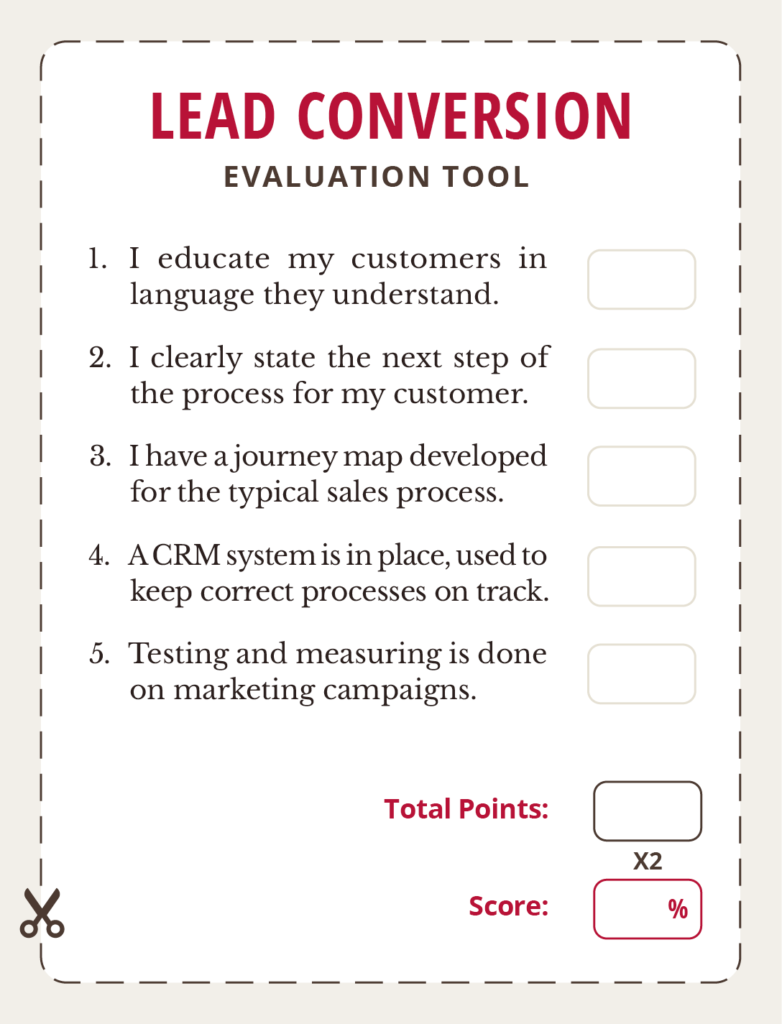
And what about you? What can you do to convert more leads? Here is an evaluation tool for scoring your own lead conversion efforts. Rank yourself on a score of 1 to 5.