On Friday afternoon, Greg Smith pulled into Larry’s Locker and strolled into the retail store. With Christmas around the corner, he was looking for a little something to send to all his clients in appreciation for an especially good year. “Snack sticks would be about right,” he thought. “They can be sent to everyone easily. I just don’t know if I can get 300+ packs in time for the holidays.”
Glancing across the selections, he found Larry’s offered four flavors: Original, Jalapeño, Cheddar, Teriyaki, and Honey BBQ. Noting the price, he pulled a pack of Original and headed to the checkout. On a whim, he also selected a grill-ready, pre-seasoned flank steak to grill for the family that weekend.
The clerk smiled courteously, took his card, and swiped it. Greg asked if they could make a lot of these snack sticks fast, like 300+ packs, on a few weeks’ notice. The clerk said she really didn’t know, and Larry, the one who did know, was already gone for the day. She told Greg that he could come back when Larry was around, and she was sure he would be happy to discuss that. They will open at 9:00 AM tomorrow.
Greg thanked her, and three minutes and 20 seconds after the door chime announced his arrival, it chimed again, noting his departure.
Next, Greg drove across town to Mike’s Meats. Parking his F-150 in front of the retail section, he wondered if he could find answers to what he had on his mind: great-tasting snack sticks in a short amount of time in a large quantity.
Glancing across the selections, he found Mike’s offered four flavors: Original, Jalapeño Cheddar, Teriyaki, and Honey BBQ. Noting the price, he pulled a pack of Original and headed to the checkout. On a whim, he also pulled a grill-ready, pre-seasoned flank steak to join the one already in the back seat—they might have Jr.’s family over if they were going to grill.
The clerk smiled courteously, took his card, and swiped it. Greg asked if they could make a lot of these snack sticks fast, like 300+ packs, on a few weeks’ notice. The clerk replied, “Now there’s a question for Mike, but he is running our food trailer down at the farmers market.” She apologized and said that if he didn’t mind, he could write down his name and number, and Mike would get back to him asap.
Greg didn’t mind, gave his number on a short customer info form, and thanked her. Three minutes and 40 seconds after the door chime announced his arrival, it chimed again, noting his departure.
Twenty minutes later, Greg’s phone beeped. “Thanks for stopping in today at Mike’s Meats. That flank steak is best grilled hot and fast—about 4 minutes per side as hot as your grill can go. Let it rest before slicing against the grain. Did you know that extra snack sticks freeze beautifully?”
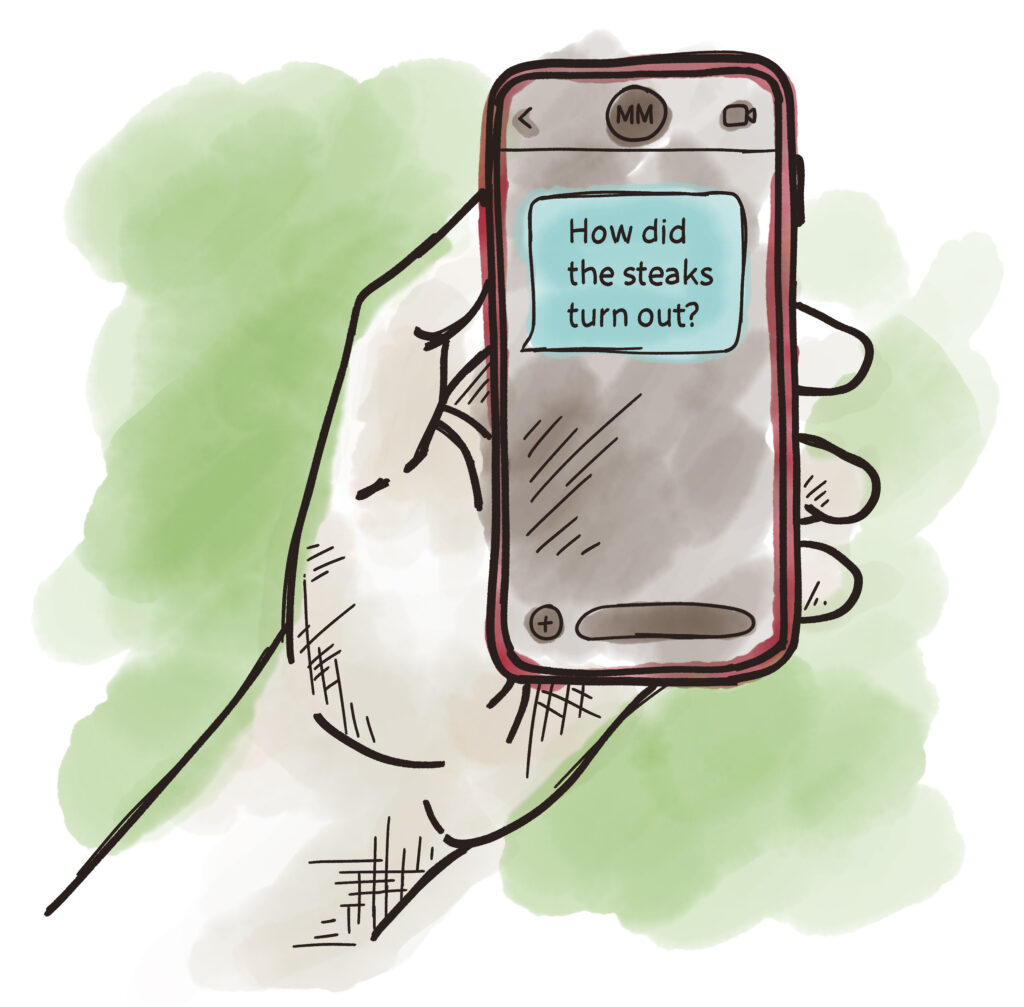
Monday morning, after the weekend grill had cooled, Greg received another message: “How did the steaks turn out? If you liked them, our garlic-herb tri-tip also uses the same seasoning and will be in the case this Friday. And just a heads-up: we’re making a fresh batch of jalapeño cheddar snack sticks this week. They sell out fast—reply if you want us to hold a pack.”
The first chance he had, Greg wasted no time and stopped at (you guessed it) Mike’s Meats. Mike was there, and he and Greg struck up a conversation. Turns out, they thought pretty much the same about snack sticks. Mike handed Greg his entire list of “Seven Attributes of Great Snack Sticks” from his Snack Stick 101 collection.
In a few minutes, Greg was walking out the door with another job checked off his to-do list. The arrangements were all in place for Mike’s Meats to ship 375 snack stick gift packages 18 days from now. A card with “Seven
Attributes of Great Snack Sticks” would be included in each package along with Mike’s Meats phone number and website address. He was carrying several packs of garlic-herb tri-tip–a gift from Mike for placing a large order.
Far too often, as customers, we pick up our meats on Friday afternoon, carry them out, attractively packaged, exactly as advertised. We tear them open, nod in approval, and go on with life. And that’s it! No message asking how they tasted. No quick tips on how to grill. No reminder of other flavors. No “thank-you” that feels human.
A week later, when the urge to have snack sticks or to fire up the grill hits again, we may not go back to the same shop, not because the product was bad, but because the relationship ended the moment the credit card cleared.
As business owners, the sale often feels like the finish line, when it’s actually a whole new starting point! Mike understood and acted on what Larry’s Locker didn’t: the opportunity to seed the next sale by fully servicing the previous transaction.
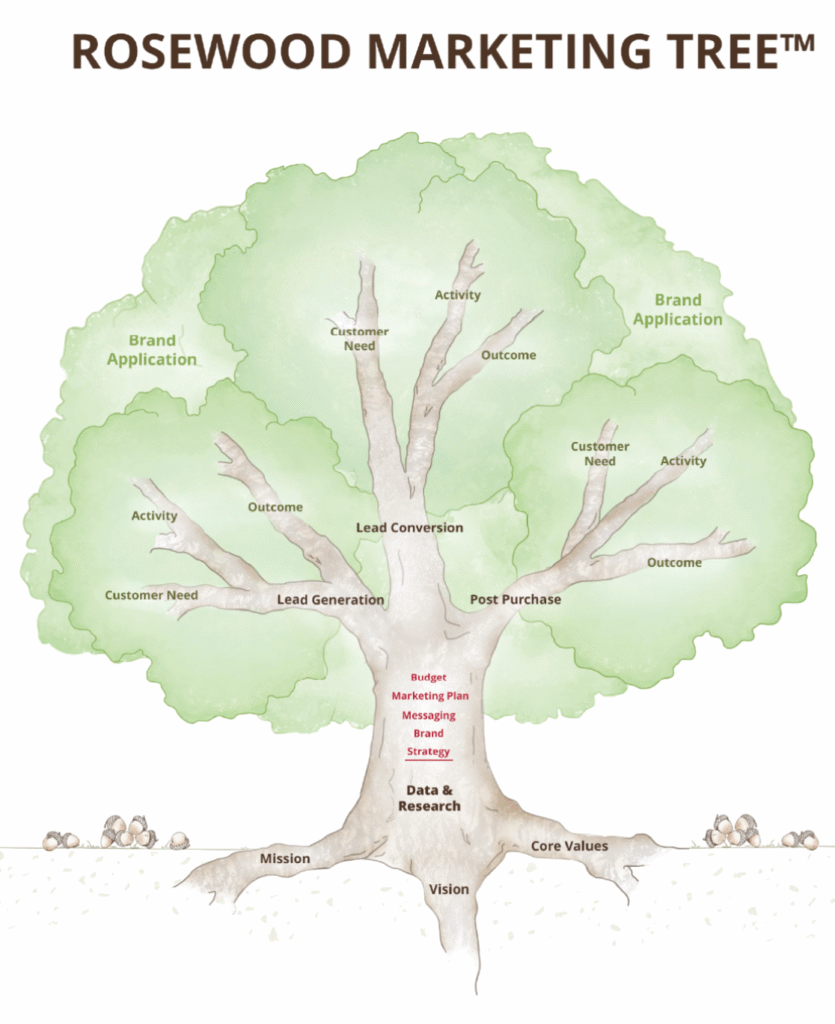
Post Purchase 101
This part of the customer’s journey is often left to chance. But it is a critical part. It is here that we prove to our customers that they made an awesome choice. Treat them well, and you can secure their deep trust and repeat orders.
Or, ignore them and risk an antagonized customer, or worse, one who simmers in silent dissatisfaction. Unhappy customers can be assuaged and even redeemed, but silent dissatisfaction quietly spreads behind your back.
Consider this: when does post-purchase activity begin? Is it only after the deal is done, the credit card swiped, or the goods delivered? Businesses should recognize that post-purchase activity actually begins the moment the customer makes up their mind to buy. As the story with Greg illustrates, the line between one transaction and another is not so very distinct: what appeared to be a quick, typical customer stop was really the backstage of a much bigger transaction. And while wrapping up the big Christmas gift order, Greg made another typical purchase.
The transition line into post-purchase is the moment the customer chooses to buy. That’s when they mentally parted with their money. That’s when they begin to live with their decision to go ahead. And that’s when you go through the gate and down the path of a continued relationship.
First, the payment process must be clear and painless. If the checkout becomes complex, or if the choice to buy suddenly thrusts your customer into a whole new set of unexpected choices and circumstances, they might back out while they can.
Rather, affirm their choice to purchase, and be ready with immediate, friendly direction on the next step. This varies widely depending on the industry and the situation. It might include an invoice or a down payment, specifically designed to be clear and understandable. It might be a reiteration of what will happen next. Do whatever it takes to be abundantly clear that the choice was a good one, they are in good hands, and the steps from here and away are uncomplicated and easy as 1,2,3.
Second, post-purchase activities should fulfill every explicit and implicit promise you made. “We will replace your wiper motor and install new wipers. Your car will be ready to pick up at 3 PM.” Well, there you have an explicit promise: deliver on it! But don’t neglect the implicit (unspoken) promises as well. If at 3 PM the customer gets into his car and the wipers work wonderfully, but gooey grease is on the control knob, and the cloth seats show new black smudges, your customer will forget the promise you kept and focus on the one that broke their trust. Instead, the windshield and the side window should be extra clean.
It’s far too easy to overpromise and under-deliver. Aim for the opposite! Underpromise and over-deliver! Don’t commit to what you know you cannot practically do. Rather, surprise your client with service a notch above. That’s what Mike was doing with his post-purchase texts. He made his clients feel like professionals by giving them grilling and presentation tips.
It is up to you, the professional in the field, to manage and direct the customer’s expectations. It’s also your responsibility to fulfill those expectations and put the cherry on top.
The third part of post-purchase activities is giving all the support necessary for the customer to utilize their choice. I prefer that the smoke detector include batteries—why shouldn’t it? I would also prefer that the mechanic shop send a reminder for my upcoming state inspection, so I don’t have to remember it. If the grass catcher for my new riding mower happens to be on back order, I appreciate being able to take one off the display floor to install on my mower so I can get down to business immediately.
Of course, this will look different in different businesses and scenarios. One busy school teacher remembers resisting the new photocopier because of all the confusing features. But imagine his delight when the salesman dropped in after school one day and asked how he and the new copier were getting along. Upon hearing of the bumpy relationship, the salesman spent the time to show him all the functions that were meaningful for their application. That’s support!
If you can’t stop by as the copier salesman did, a check-up phone call to the client might be another route. Try to gauge whether the customer would do business again or refer others. Maybe this includes asking them outright about their experience. Maybe it is checking to see if the replaced wiper motor is still working. It could be a thank-you postcard with your contact information included. The goal is to continue the relationship after the sale, and this is achieved through thoughtful actions by someone who cares about the user’s experience, not just that the deal was closed.
Finally, post-purchase activity should assess customer satisfaction. Are there frustrations or fears downstream from the decision to buy? Is your business really doing what you set out to do? Surveys can help here, but they are usually impersonal and cold. Many customers feel that a survey is asking for their time for the company’s benefit. Consider emailing or calling the customer to learn their satisfaction level. If the same concern continues to come up in post-purchase discussions, consider seriously the cause and how it could be addressed.
Post-purchase functions are a very important part of a customer’s journey. Don’t just take their money and assume all is well. Most businesses spend months trying to win a customer, and minutes acknowledging them after the purchase. Yet post-purchase follow-up is where trust deepens, repeat revenue is created, and positive word-of-mouth begins.
Summary:
When done properly, post-purchase follow-up does three things at once: it reduces uncertainty, it builds trust, and it creates a reason to return. For Greg, the post-purchase texts from Mike’s Meats reduced his uncertainty by telling him how to handle his steak. They built trust by providing evidence that Mike’s Meats knows their craft and their product well. And they gave a reason to return: we’ve got tri-tip and fresh snack sticks, and we want you to know about it. No begging, no hard selling—just great info that moved Greg to do more business with Mike’s.
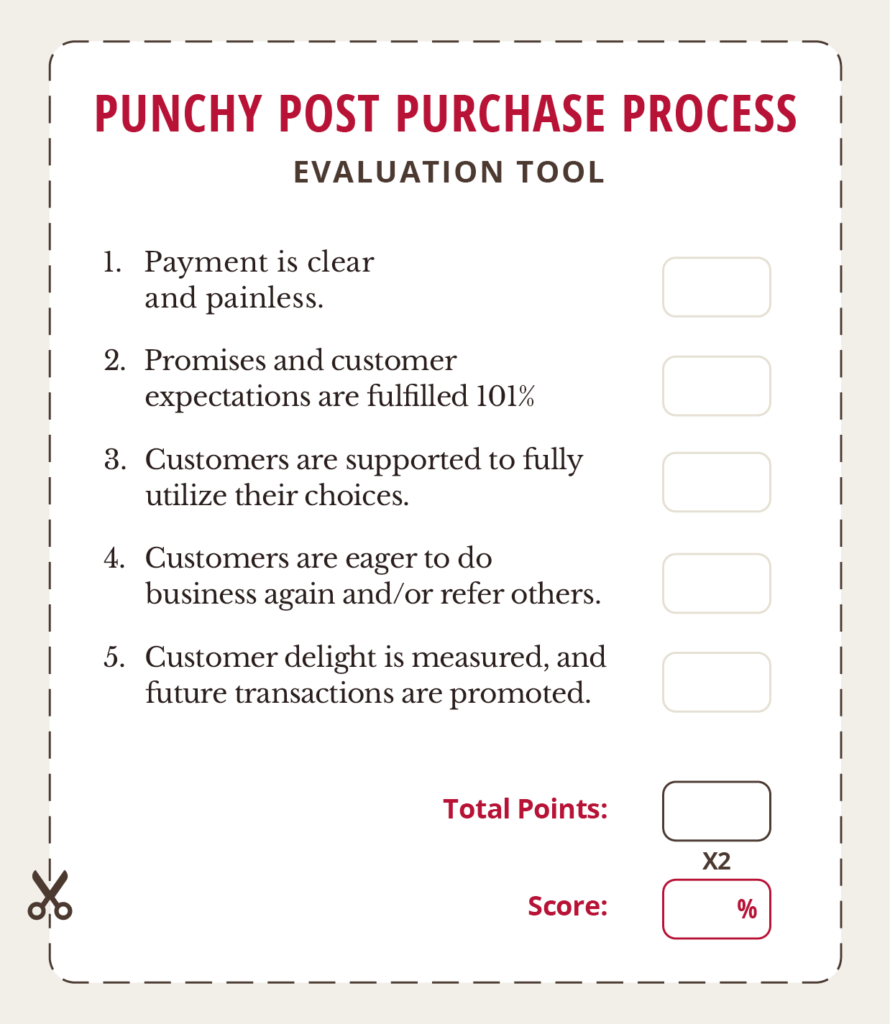
How well do you do with post purchase follow-up? Here is an evaluation tool for scoring your own efforts. Rate yourself on a score of 1 to 5.