Why disconnected marketing plans fail — and what it takes to build a customer-centered strategy instead.
Ask a business owner how marketing is going, and you often get the same answer: we are doing a lot, but we’re not sure what’s working. There are ads running. There’s a new sign out front. Someone rebuilt the website last spring. We hired a salesman. And yet the phone does not ring the way it should, and nobody can say exactly why.
Those businesses are not typically short on good ideas. They often have solid plans, but have failed to create a strategy to connect them. In addition, they have not accounted for who their primary customer truly is.
To put it succinctly, they lack a unifying strategy that puts their primary customer at the center of their marketing.
That distinction separates marketing dollars that create real ROI from marketing dollars that evaporate.
This article outlines 4 solid principles that are key to defining a customer-centered marketing strategy that won’t fail when plans change and can save you money while building a pipeline of customers for the future.
Principle # 1: You Must First Answer the Right Questions
Today’s marketing is much more than effective advertising. It is wise to first stop, ask, and answer several questions about your business to help you think about what you are actually doing. As a business owner, we tend to view growth through the lens of the service or product that we offer, how to improve it, and how to create efficiency within the business system. But the world does not revolve around our products; rather, our products revolve around our customers. We do well to step away from our craft and ask:
1. What business are we actually in?
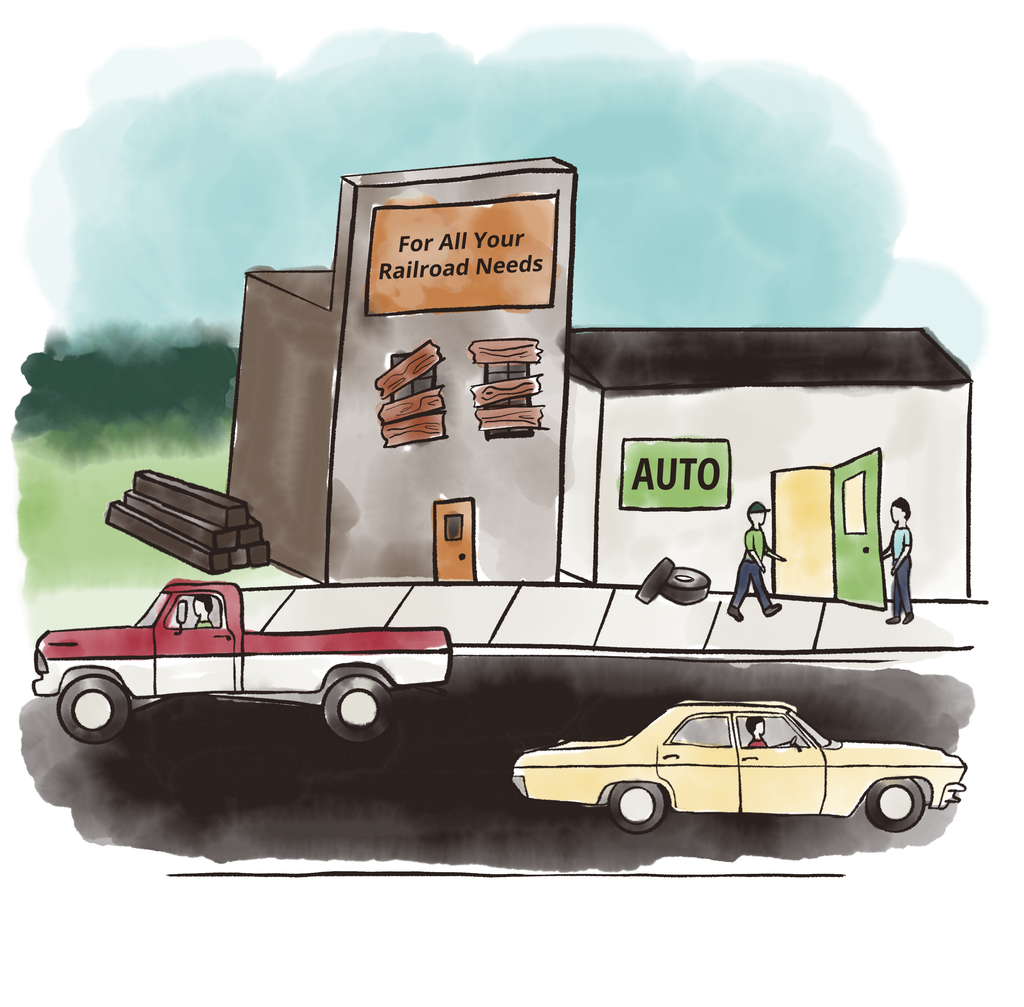
The railroads once wrongly believed they were in the railroad business and focused all of their resources and energy on building rails, cars and depots rather than understanding that their customers were actually buying transportation of goods. As alternatives became available, their customers moved on, as did their revenue. Are you building sheds, or solving storage problems? The correct answers keep you relevant when the market changes.
2. Who is our primary customer and what are they actually buying?
When a contractor buys a ¼” drill bit, what they’re really buying is the power to make a ¼” hole. If they are looking for 600 holes without sharpening, they will gladly pay more because they know that sharpening costs will eventually exceed the extra purchase price. It’s not your product, but what it does for your customers, that drives sales.
This awareness changes how you advertise your product and how you invest in customer service.
3. Do our specialties match what that customer wants, and is the business built around their needs?
You can produce the highest-quality, most exquisite detail in a type of furniture that only a few people ever want to buy, and no amount of great advertising will fix the problem. Have a product or service that hardly sells? It may be time to ask whether it aligns with your customers’ needs and wants.
4. What does our customer really see (and is it consistent)?
As Peter Drucker once said “Marketing is the whole business seen from the customer’s point of view.” Every single touchpoint with your business is important, and each aspect either builds or erodes trust.
If our ads bring in leads but our sales process is shoddy, what have we actually gained? Close rates will remain low.
Long-term success comes down to creating a trusted brand, consistent experience, and a product that meets the needs of the most important aspect of your business… your customer.
Principle # 2: The Customer Decides What Value Is, Not You
As you build a strategic position for the future, consider this truth. Every business exists to create a customer and to create value for them.
But while our businesses create value, we do not truly define the value we’re are selling. We create ideas, improvements, and value based on our business’s sweet spot. The customer ultimately determines if this is truly valuable by deciding if, when, and how to buy.
For some buyers, the greatest value is actually the cheapest price option with the lowest service level — a legitimate position, and some companies win with it. Dollar General, for example, has been tremendously successful with this position. For others, it is a moderate price surrounded by trust, confidence, and service. Some businesses sell prestige: one-on-one relationships, attentive care throughout the sale, and presentation reaching beyond the product itself. Examples like Ferrari or Hilton Hotels fit this category.
It is critically important to know which kind of value your chosen customer is buying, and then to steadily build outsized value of that particular kind. Deliver premium service to a price shopper and you waste money. Deliver bare-bones service to a customer who wanted a relationship and you lose the sale without knowing why.
Honest research & customer feedback is what makes this knowable: how much potential exists here, how much competition is chasing the same customer, and whether our brand speaks in a voice these people recognize as a trusted language.
In creating a successful customer-centered strategy, it is important to understand what is considered valuable by the people you are selling to and to ensure that every part of your business is oriented toward creating value for that customer.
Principle # 3: Integrated Efforts are Essential to Lasting Success
Integration sounds abstract until you watch it fail. Take a contractor who has invested heavily in custom graphic wraps for the trucks that serve the jobsite — good money, well spent. But the invoices and paperwork the customer handles for the next four months are plain and forgettable. After all, the job is sold, and paperwork just communicates facts.
Except it does not. That paperwork may be the difference between a raving fan who gives an excited referral and careful silence when a coworker mentions the building project he hopes to do this summer.
The customer does not experience your business in segments. He or she experiences one whole encounter. Customer satisfaction results from the whole experience rather than individual pieces.
Today’s consumers have been taught to expect consistency of products or services. Any person can order a Big Mac in California or New Hampshire, and it will be the same sandwich and the same experience on both ends of the country. Fair or not, those learned expectations now judge every business. If your signage and websites use different fonts and colors, or two ads carry conflicting messages, trust erodes automatically — not because the customer is grading your design, but because inconsistency reads as instability or confusion.
This is why everyone who touches marketing is a stakeholder in it: employees, dealers, suppliers, the office staff who answer the phone. Anyone and everything that affects the customer’s experience, or is affected by it, belongs inside the strategy.
Principle # 4: Thoughtful Strategy Outperforms a Good Plan Everytime
Roger Martin has spent a career making one uncomfortable point: most of what companies call strategic planning has little to do with strategic success.
A plan is a list of things you intend to do. Hire a sales manager. Build a new shop. Run a series of ads in key publications or update the website. Plans are satisfying because most items are fully inside your control — you make a list of ideas, decide, pay the bill, and it happens. You can guarantee the billboard goes up. You cannot guarantee anyone calls.
A well-defined strategy is different in that it defines an integrated set of choices that positions the organization to win over time. Those choices are all focused on creating the best possible scenario — a customer choosing to purchase from you over someone else and every plan you create serves this strategy. The choices guide the plan, and anchor future decisions.
Consider how STIHL has created a lasting and winning strategy for their business. STIHL chainsaws are not sold at Home Depot or Lowe’s. That is not an oversight or a sales failure. It is a strategic choice the company has made and defended for decades, and it costs them shelf space in the two largest home improvement chains in America.
Homelite and McCulloch, two brands that once held most of the American chainsaw market, devalued their brands with short-term plans. To meet the price point these big box stores required, they gladly cheapened the product, and the names, once synonymous with quality, never recovered.
STIHL’s American president, Fred Whyte, once stated the company’s position plainly. “I can honestly say that we have never seriously considered going the way of the mass channel.” They chose a strategy based on understanding their customers’ real needs and now have a strong, trusted brand that engenders loyalty among the people who use their products.
By defining what their customers actually want, they have strategically chosen to sell through dealers instead of big-box stores. This choice shaped their plans and actions. They attract a purchaser who wants to buy from a dealer who will sharpen it, tune it, and have the right bar and chain in stock the week he needs it. He willingly pays more for it and comes back for OEM parts and service. With this strategic choice, they have maintained the value of their brand and chosen to market to a quality-driven customer suited to their product.
Different from a good plan, a real strategy positions you on the playing field of your choice so that you can consistently succeed where others fail.
Start, Then Adjust
Creating a strategy in the beginning can tend to feel more elusive. It requires admitting what you do not know, choosing one customer at the cost of others, and making choices that focus on long-term results over short-term gains.
No strategy is perfect when created. But it should be durable, getting tweaked and adjusted over time to accommodate new information, changing market conditions, and the development of your product into better value for your customer of choice. For our contractor, the goal was never a perfectly branded invoice, but a business where every part fits — where the paperwork matches the truck, and the answer to “why are we doing this?” is the same at the owner’s desk as on the shop floor.
Start with a simple document that contains your fundamental strategic choices: your primary customer, what they find most valuable, and how you will best deliver that value in a distinct way.
Review it during annual planning or when making major business decisions. Test it against reality and make adjustments and improvements regularly.
You are never too small to consider these truths. Business, like life, is a long game, and those who prepare carefully for a future they cannot control are the ones still standing years from now.